Creating useful content is important, but simply publishing good articles does not always guarantee higher Google rankings. Search engines also look at whether a website shows real experience, knowledge, credibility, and trust.
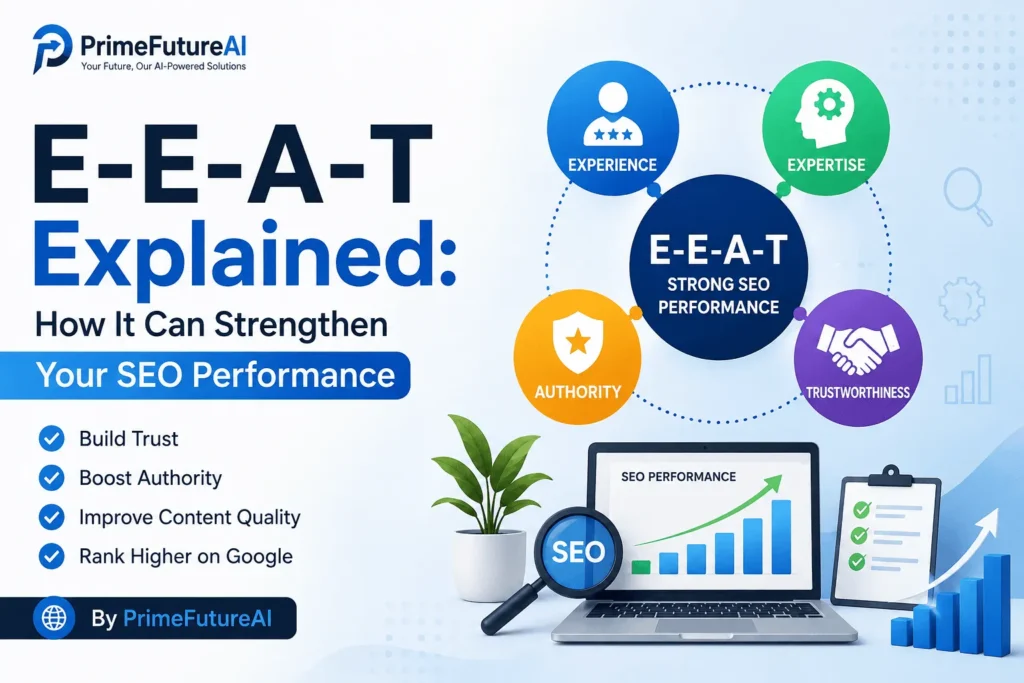
E-E-A-T stands for Experience, Expertise, Authoritativeness, and Trustworthiness. These qualities help show both search engines and visitors that a website provides reliable information and understands its subject. In competitive industries, demonstrating these signals can help a business stand out from similar websites.
E-E-A-T should not be treated as a separate SEO task. It can be supported through quality content, strong on-page optimization, technical improvements, genuine backlinks, clear author information, and other digital marketing activities. When these elements work together, they can improve a website’s credibility, attract more relevant visitors, and help build stronger relationships with users over time.
What Is E-E-A-T and Why Is It Important?
E-E-A-T represents four important qualities that can help a website demonstrate its value and credibility:
- Experience: Showing that you have genuine, practical experience with the subject you discuss.
- Expertise: Providing useful information based on strong knowledge and skills in your field.
- Authoritativeness: Building a reputation as a dependable source that people and other websites can recognize.
- Trustworthiness: Making sure your website, business information, and content are accurate, transparent, and dependable.
E-E-A-T is not a simple score that Google gives to a website. Instead, these qualities are signals that can contribute to how users and search engines perceive the quality of a site. Strong credibility can also encourage visitors to trust your content, stay longer, and engage with your business.
For businesses offering services such as SEO audits, keyword research, content marketing, local SEO, and social media management, applying E-E-A-T principles can make their online presence more convincing. Demonstrating real experience, publishing helpful content, and maintaining accurate business information can gradually strengthen brand reputation and customer confidence.
Is E-E-A-T a Google Ranking Factor?
E-E-A-T is not considered a direct Google ranking factor in the same way as factors such as page relevance or technical signals. However, Google uses E-E-A-T concepts in its Search Quality Rater Guidelines to help assess whether content provides reliable and useful information.
A website that clearly demonstrates real experience, subject knowledge, authority, and trust can create a stronger overall search presence. These qualities can also improve how users perceive and interact with a website.
For example, an SEO company providing technical SEO or on-page optimization can demonstrate E-E-A-T by publishing practical guides, detailed case studies, helpful service pages, and content based on genuine industry knowledge. This can make the website more credible to potential customers and create a stronger online reputation over time.
- Better On-Page SEO: Creating accurate, helpful, well-organized content can make pages easier for both visitors and search engines to understand.
- Stronger Off-Page SEO: Earning links and mentions from reputable websites can help build a positive online reputation and demonstrate credibility.
- Improved Technical SEO: A secure, fast, accessible, and easy-to-use website provides visitors with a better experience and supports overall website trust.
By incorporating E-E-A-T into different areas of SEO, businesses can build greater credibility, encourage users to engage with their content, and develop a stronger presence in search results over time.
Why Google Values E-E-A-T?
Google aims to show users information that is useful, dependable, and relevant to their search. This is why websites that demonstrate strong E-E-A-T qualities can create a better impression of content quality and reliability.
Strong E-E-A-T can be demonstrated through:
- Accurate information: Content should be useful, well-researched, and written by people who understand the subject.
- Real-world experience: Sharing practical knowledge, examples, or firsthand insights can make content more valuable to readers.
- Trust and transparency: Clear business details, secure website features, contact information, and honest communication can help visitors feel more confident.
For businesses offering services such as keyword research, social media marketing, and SEO audits, demonstrating these qualities can help establish a more credible online presence. Consistently providing valuable and trustworthy information can also strengthen the relationship between a brand and its audience.
How E-E-A-T Can Influence SEO Performance
E-E-A-T can support different parts of an SEO strategy by helping a website demonstrate knowledge, credibility, real experience, and trust. Its impact can be considered across on-page, off-page, and technical SEO.
1. Improving On-Page SEO
E-E-A-T encourages websites to make their content useful, clear, and trustworthy. Some effective practices include:
- Use descriptive headings and subheadings so visitors can quickly understand the purpose of each section.
- Add relevant author information when it helps demonstrate the writer’s background or experience.
- Publish accurate and well-researched information rather than content created only to target keywords.
- Support important claims with reliable references where appropriate.
- Provide practical tips and information that readers can actually use.
For example, an agency offering technical SEO services can publish detailed case studies or explain previous optimization projects. Sharing genuine knowledge and practical results can help demonstrate experience and build credibility.
2. Supporting Off-Page SEO
Off-page SEO is also connected with how a brand is perceived across the internet. E-E-A-T can be supported through genuine authority and reputation signals such as:
- Earning backlinks from relevant and reputable websites.
- Receiving legitimate mentions from respected industry websites, communities, and social platforms.
- Displaying genuine customer reviews and testimonials.
- Building a consistent and professional brand presence across different online channels.
When these signals come from trustworthy sources, they can help strengthen a website’s reputation and make the business appear more credible to potential customers.
3. Strengthening Technical SEO
A technically sound website can also contribute to user trust. Important areas include:
- Website security: Use HTTPS and maintain proper security measures to protect visitors.
- Page speed: Improve loading performance, particularly for users browsing on mobile devices.
- Site structure: Organize pages logically so visitors and search engine crawlers can navigate the website easily.
- Structured data: Use relevant schema markup to help search engines better understand specific types of content.
Technical SEO does not replace quality content or credibility, but it creates a strong foundation for them. When a well-structured website is combined with useful content, genuine expertise, and transparent business information, it can create a more professional and trustworthy experience for users.
How to Build E-E-A-T Into Your Content Strategy
E-E-A-T should be part of your overall content and digital marketing approach rather than something added at the end. By consistently showing knowledge, practical experience, authority, and transparency, you can create content that is more useful to your audience and more credible as a business resource.
1. Demonstrate Knowledge Through Useful Content
Your content should do more than include keywords. It should answer real questions and give readers information they can apply.
Consider these practices:
- Write detailed guides, tutorials, and informative blog posts.
- Share practical solutions instead of repeating broad or generic advice.
- Use relevant examples, industry data, and current trends to explain important points.
- Create content that addresses the actual problems your target audience faces.
For topics such as local SEO, on-page optimization, or social media marketing, practical examples and clear recommendations can help demonstrate genuine knowledge of the subject.
2. Build Authority Through Quality Link Building
A website can strengthen its reputation when other relevant and respected sources recognize its content. Instead of focusing only on getting a large number of backlinks, concentrate on earning meaningful links.
Some useful approaches include:
- Contributing valuable content to relevant industry websites.
- Building relationships with professionals and businesses in your niche.
- Publishing original research, useful statistics, or unique insights that other websites may reference.
- Creating resources that naturally attract attention and links.
Over time, genuine recognition from relevant sources can contribute to a stronger online reputation and greater brand visibility.
3. Increase Trust Through Transparency
Trust is essential when visitors are deciding whether to use a product or service. A transparent website makes it easier for potential customers to understand who they are dealing with and what they can expect.
You can improve trust by:
- Providing clear and easy-to-find contact information.
- Explaining your services honestly without making unrealistic promises.
- Showing relevant case studies or examples of previous work.
- Keeping business information and branding consistent.
- Making sure website interactions are secure.
For services such as SEO audits, keyword research, and content writing, these details can help potential clients feel more comfortable before making a decision.
4. Use Social Media to Support Your Online Reputation
Social media can complement your website by giving your audience additional ways to discover your knowledge and interact with your brand.
You can:
- Share useful SEO tips, short guides, and industry insights.
- Ask questions and encourage discussions through comments, polls, or other interactive posts.
- Share project experiences and educational content.
- Direct interested users to detailed resources on your website.
An active and helpful social presence can make your brand more recognizable while giving potential customers another way to evaluate your knowledge and credibility.
5. Keep Learning and Refreshing Your Content
Digital marketing changes frequently, so outdated information can reduce the usefulness of a website. Regularly reviewing and improving your content helps keep your resources relevant.
For example:
- Update older articles with current information, statistics, and industry developments.
- Review service pages to ensure the strategies and descriptions still reflect your current approach.
- Analyze your SEO performance to identify missing topics and new content opportunities.
- Remove or improve information that is no longer accurate or useful.
Regular maintenance shows visitors that your website is active and focused on providing current information. Over time, this can contribute to a more reliable and professional online presence.
Practical Examples of E-E-A-T in Action
E-E-A-T becomes easier to understand when we look at how different businesses can apply it to their everyday online activities. Here are some simple examples:
- Content Writing Business: A content agency can introduce its writers with short profiles that explain their professional background, experience, and areas of knowledge. This helps readers understand who is creating the content.
- Local SEO Agency: An SEO company can publish case studies showing how its work improved a client’s visibility, rankings, leads, or other measurable results. Real examples can make its claims more credible.
- SEO Audit Provider: An SEO audit service can clearly explain the main steps and methods it follows when reviewing a website. This gives potential customers a better understanding of what they are paying for.
- Technical SEO Specialist: A technical SEO professional can demonstrate how they improve website security, mobile usability, site structure, speed, and other technical areas.
- Social Media Marketing Agency: A social media agency can share genuine campaign results, engagement figures, and customer experiences to demonstrate the effectiveness of its work.
These examples show that E-E-A-T is not limited to one type of website. Businesses can demonstrate experience, knowledge, authority, and trust in practical ways through their content, services, results, and communication with customers.
Frequently Asked Questions About E-E-A-T
1. How long does it take to see SEO improvements from E-E-A-T?
There is no fixed timeline because results depend on factors such as competition, website quality, content, and the SEO strategy being used. Consistent improvements may gradually produce positive results over several months.
2. Can small businesses benefit from E-E-A-T?
Yes. Smaller businesses can demonstrate credibility by sharing genuine customer reviews, local expertise, project examples, and useful information related to their services. These elements can help build confidence with potential customers.
3. Is E-E-A-T useful only for blogs and content websites?
No. E-E-A-T principles can be valuable for many types of websites, including service businesses, online stores, agencies, publishers, and professional websites. Any site that wants users to trust its information or services can benefit from demonstrating these qualities.
4. What are some ways to show real experience online?
Businesses can share completed projects, detailed case studies, practical examples, customer feedback, and relevant author or team information. Showing what you have actually done can make your expertise more believable.
5. Can social media contribute to E-E-A-T?
Social media is not a direct E-E-A-T ranking factor, but an active and genuine presence can support a brand’s overall reputation. Sharing useful information, interacting professionally with users, and maintaining consistent business details can help strengthen credibility and visibility online.
Conclusion
E-E-A-T, which represents Experience, Expertise, Authoritativeness, and Trustworthiness, can help businesses create a more credible and valuable online presence. Although it is not a single direct Google ranking factor, these qualities support the type of helpful, reliable website experience that search engines aim to reward.
Businesses offering SEO, keyword research, content writing, SEO audits, local SEO, technical optimization, and social media marketing can use E-E-A-T principles to strengthen their website and brand reputation. Providing useful content, demonstrating real experience, earning relevant backlinks, maintaining a technically sound website, and being transparent with customers can all contribute to greater credibility.
What Should You Do Next?
Start by reviewing your website from an E-E-A-T perspective. Check whether your content demonstrates genuine knowledge and experience, improve outdated pages, strengthen your technical SEO, build relationships with reputable websites, and use social media to share useful industry information.
E-E-A-T is not something that can be improved overnight. It is an ongoing process that requires consistent content quality, transparency, technical maintenance, and genuine value for your audience. By focusing on these areas, you can build a stronger foundation for long-term SEO growth and customer trust.