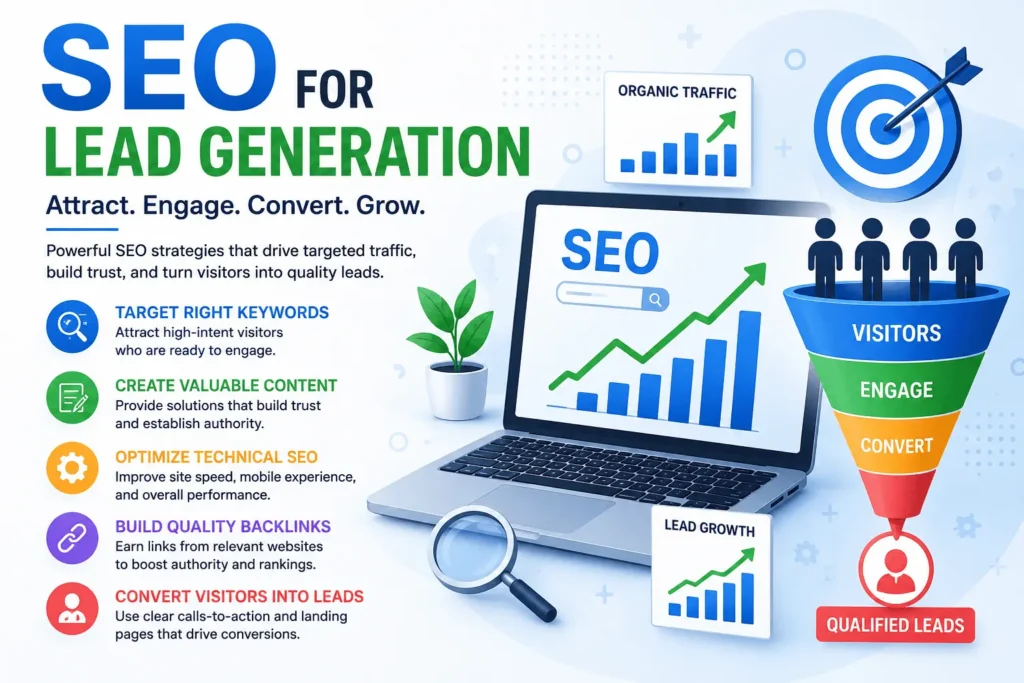
Every business wants a reliable way to attract new customers. While paid advertising can deliver quick results, the costs often increase over time. That is why many companies choose SEO as a long-term method to generate quality leads.
With a strong SEO strategy, your website can appear in front of people who are already searching for your products or services. Instead of paying for every visitor, you can earn consistent organic traffic that has a better chance of becoming a customer.
In this guide, you will learn practical techniques that are easy to understand and apply. We will explore keyword research, website optimization, valuable content creation, local SEO, and other proven methods that help convert website visitors into genuine business opportunities.
The main purpose of these strategies is not just to increase website traffic. Real success comes from attracting people who are interested in your business and encouraging them to contact you, request a quote, or make a purchase.
Whether you own a local business or manage an online brand, these SEO techniques can help you generate more leads. Although search engine algorithms and digital marketing trends continue to evolve, the basic principles of SEO for lead generation remain effective for achieving long-term business growth.
How SEO Helps Generate Business Leads?
SEO for lead generation is the process of improving your website so it attracts people who are interested in your products or services and are more likely to become customers. Instead of focusing only on higher search rankings, this strategy aims to bring visitors who are ready to take meaningful action.
Traditional SEO is mainly used to increase website traffic and online visibility. Lead generation SEO goes a step further by turning those visitors into potential clients through well-planned content and conversion-focused pages.
A strong lead generation SEO strategy includes:
- Finding keywords that show purchase or service intent
- Creating landing pages that encourage users to contact your business
- Using clear calls to action that guide visitors toward the next step
The main objective is to connect with the right audience and encourage them to fill out a form, book a consultation, request a quote, or get in touch. When the right SEO strategy is combined with an easy user experience, it can generate high-quality business leads.
Many companies believe that getting to the top of search results is enough, but rankings alone do not grow a business. If visitors leave your website without contacting you or completing a desired action, the traffic has little value.
Lead generation SEO focuses on the complete customer journey. It attracts the right users through search engines, provides helpful information, and leads them toward a simple action. This approach helps convert organic visitors into qualified leads and supports steady business growth over time.
Why SEO Is Essential for Lead Generation in 2026?
In 2026, SEO remains one of the most effective digital marketing strategies for attracting quality leads. It helps businesses connect with people who are actively searching for products or services, making it easier to reach potential customers without relying only on paid advertising.
Here are some of the biggest benefits of using SEO for lead generation:
- Delivers steady results that can last for a long time
- Builds credibility because many users trust organic search listings
- Offers better long-term value by reducing the need for continuous ad spending
- Reaches customers at different stages of their buying journey
Today’s customers spend more time researching before making a decision. They compare options, read reviews, and gather information before choosing a product or service. Businesses that appear in search results throughout this process have a greater chance of earning customer trust.
SEO helps your website stay visible from the first search to the final decision. As people repeatedly see your brand in search results, they become more familiar with your business, making them more likely to contact you when they are ready to buy.
Another major advantage of SEO is its lasting impact. A well-optimized website and valuable content can continue bringing qualified visitors for months or even years. Unlike many other marketing methods that stop producing results when spending ends, SEO keeps working over time and provides a strong foundation for continuous business growth.
As online search becomes an important part of nearly every buying decision, businesses with a strong SEO strategy gain a clear advantage. Being visible when customers are looking for answers increases your chances of generating more leads and staying ahead of the competition.
Keyword Research Strategies for Better Lead Generation
Keyword research is one of the most important parts of a successful lead generation SEO strategy. Choosing the right search terms helps you attract visitors who are more likely to become customers, while selecting the wrong keywords can lead to low-quality traffic and poor results.
Use these simple keyword research strategies to improve your lead generation efforts:
- Focus on keywords that show buying or hiring intent instead of only high search volume.
- Find keywords that reflect the problems your target audience wants to solve.
- Add local keywords if your business serves customers in a specific city or region.
- Use long-tail keywords because they are more specific and often attract highly interested visitors.
It is also helpful to organize keywords based on where users are in the buying process. Not every searcher is ready to make a purchase, so your content should match their needs at each stage.
A simple keyword funnel looks like this:
- Awareness Stage: People searching for basic information or answers.
- Consideration Stage: Users comparing products, services, or solutions.
- Decision Stage: People searching for a business or service with the intention of taking action.
Covering all three stages allows you to reach potential customers throughout their journey. While decision-stage keywords can generate leads more quickly, awareness content helps build trust and introduces your business to future customers.
An effective keyword strategy balances short-term opportunities with long-term growth. Instead of chasing only highly competitive keywords, include easier opportunities that can help your website gain visibility faster.
Researching competitor websites can also uncover valuable keyword ideas. By understanding which search terms similar businesses target, you can discover content gaps and create pages that better meet user needs.
Finally, review your keyword performance regularly. Search habits and customer interests change over time, so updating your keyword strategy helps keep your website relevant, improves rankings, and continues bringing qualified leads.
On-Page SEO Tips to Turn Website Visitors into Leads
Getting your website to rank in search results is just the first step. The real success comes when visitors take action, such as contacting your business, requesting a quote, or signing up for your services. A well-optimized page makes this process simple and encourages users to move forward.
Create Landing Pages That Drive Conversions
Landing pages are one of the most important parts of lead generation SEO. Even if a page receives plenty of traffic, it will not produce results unless it is designed to encourage visitors to act.
Here are some effective ways to improve your landing pages:
- Focus each page on one main objective.
- Write clear headlines that explain the value you offer.
- Build trust by adding customer reviews, testimonials, or success stories.
- Keep contact forms short and easy to complete.
- Make sure your pages load quickly and work smoothly on both desktop and mobile devices.
Avoid filling your pages with unnecessary content or too many choices. A clean layout helps visitors stay focused and increases the chances of generating leads.
It is also important to ensure your page matches the search term that brought the visitor to your website. When users find exactly what they expected, they are more likely to stay on the page and complete the desired action.
Finally, continue testing and improving your landing pages. Updating headlines, button text, page structure, or other small design elements can improve user engagement and increase your conversion rate over time.
How to Write CTAs That Increase Lead Conversions?
A call to action (CTA) tells visitors what they should do next after reading your content. Whether you want people to contact your business, book a consultation, or request a free quote, a strong CTA can significantly improve your lead generation results.
Follow these simple tips to create effective CTAs:
- Use clear action words that encourage users to take the next step.
- Keep your message short, direct, and easy to understand.
- Place CTAs in visible areas, including near the top of the page and after important sections.
- Choose a CTA that matches the visitor’s level of interest and buying stage.
Even a well-designed landing page may fail to generate leads if the CTA is unclear or unconvincing. Experimenting with different button text, wording, and placement can help you discover what encourages more users to click.
You should also make the conversion process as simple as possible. Avoid asking for unnecessary information, remove extra steps, and provide clear instructions about what happens after the visitor clicks. A smooth and straightforward experience increases trust and makes people more likely to complete the desired action.
Content Marketing Strategies That Generate More Leads
Content marketing and SEO are most effective when they work together. High-quality content helps your website attract the right audience, builds confidence in your brand, and encourages visitors to become potential customers.
Here are some proven content marketing strategies for lead generation:
- Publish detailed guides that answer common questions and provide useful solutions.
- Share customer success stories and case studies to demonstrate real results.
- Offer free resources, such as eBooks, checklists, templates, or guides, in exchange for contact information.
- Refresh older articles with updated information to keep them valuable and improve their search performance.
Every piece of content should have a clear purpose. Some articles can educate new visitors, while others can help people compare options or encourage them to contact your business. Creating content for each stage of the customer journey helps turn readers into qualified leads.
Quality is more important than quantity. Publishing well-researched, helpful content on a regular schedule usually delivers better long-term results than posting a large number of low-value articles.
You can also increase the value of your content by using it in multiple formats. For example, one detailed blog post can be transformed into social media updates, email newsletters, short videos, or infographics. This allows you to reach more people without creating new content from scratch.
The most successful content marketing starts with understanding your audience. When your content answers real questions, solves common problems, and provides practical information, it naturally builds trust and encourages visitors to take the next step with your business.
Local SEO Tips to Attract More Nearby Leads
If your business serves a specific city or region, local SEO is one of the best ways to reach potential customers. It helps your business appear in local search results when people are looking for nearby products or services, making it easier to generate qualified leads.
Follow these local SEO best practices to improve your visibility:
- Complete and regularly update your Google Business Profile.
- Add location-based keywords naturally throughout your website.
- Encourage customers to leave reviews and respond to their feedback.
- Keep your business name, address, and phone number consistent across all online listings.
- Create dedicated pages for each location if you operate in multiple service areas.
People searching for businesses in their local area often have a strong intention to make a purchase or book a service. Appearing in these search results gives your business a better chance of attracting customers who are ready to take action.
For service-based businesses, local SEO works as a powerful lead generation tool that connects them with customers searching for nearby services. A strong local presence helps you compete more effectively and increases your chances of receiving inquiries from people in your target market.
Customer reviews are another important part of local SEO. Positive feedback builds trust, improves your online reputation, and encourages new customers to choose your business. Responding to reviews also shows that you value customer experience.
Keeping your Google Business Profile accurate with updated business hours, services, contact details, and recent photos can further improve your visibility. Many people decide which business to contact based on this information before they even visit the website.
Technical SEO Factors That Improve Lead Generation
Technical SEO creates the foundation for a website that performs well in search results and provides a smooth experience for visitors. While users may not notice these improvements, they have a direct impact on your ability to attract and convert potential customers.
Pay attention to these important technical SEO elements:
- Improve website speed so pages load quickly.
- Make sure your website works properly on mobile devices.
- Organize your site with a clear and easy-to-follow navigation structure.
- Protect your website with HTTPS to increase security and user confidence.
- Find and repair broken links or error pages that interrupt the user experience.
A technically optimized website supports every part of your SEO strategy. Even high-quality content and well-researched keywords cannot deliver strong results if visitors experience slow loading times or have difficulty using your site.
Technical SEO also helps keep visitors engaged after they arrive. Fast performance, simple navigation, and a reliable browsing experience make it easier for users to explore your services and complete actions such as submitting a contact form or requesting a quote.
Regular technical SEO audits are essential for maintaining website performance. They help identify issues before they affect search rankings or user experience. Small improvements, such as fixing page errors, increasing loading speed, or improving mobile usability, can lead to higher traffic, better engagement, and more qualified leads over time.
Conclusion
SEO is one of the most effective digital marketing methods for attracting qualified leads and supporting long-term business growth. A successful strategy combines targeted keywords, helpful content, a fast and user-friendly website, and clear calls to action that encourage visitors to connect with your business.
Strong SEO results are achieved through consistent work rather than instant changes. Monitoring performance, updating content, and improving your website regularly help build better search visibility and bring in valuable leads over time.
If you want to strengthen your online presence, PrimeFutureAi provides SEO solutions designed to increase organic traffic and generate high-quality business leads. A well-planned SEO strategy can turn your website into a reliable source of new customers in 2026 and the years ahead.
Every business has different objectives, audiences, and competition, so an SEO plan should always be customized to match those unique requirements. A personalized approach often delivers better results than using the same strategy for every website.
The best time to improve your SEO is now. Even small updates made consistently can create noticeable improvements in search rankings, website traffic, and lead generation. Staying committed to ongoing optimization helps build sustainable growth and long-term online success.